
Beneath the waves lies an invisible architecture—not of steel or stone, but of pressure, probability, and perception. This hidden framework governs the behavioral blueprints of marine life, guiding survival, adaptation, and evolution in one of Earth’s most extreme environments. By interpreting ocean dynamics through metaphor, scientists uncover patterns that transcend raw data, revealing how deep-sea creatures respond not only to physical forces but to abstract concepts like risk, dominance, and chance. These metaphors transform complex realities into intuitive stories, shaping both biological understanding and human interaction with the sea.
Metaphors as Behavioral Lenses
In the abyssal depths, where light fades and pressure soars, organisms do not merely endure—they adapt through deeply coded behavioral logic. One powerful metaphor is pressure as a silent architect, illustrating how deep-sea life evolves structural and physiological traits to withstand pressures exceeding 15,000 PSI. This extreme environment acts as a relentless force, sculpting biology into functional form: from gelatinous tissues that resist compression to specialized enzymes that function under stress. Just as architects shape buildings with material constraints, nature shapes life with physical limits.
The role of probability in survival further illuminates this metaphorical framework. Consider genetic traits with less than 50% survival odds persisting across generations—an evolutionary anomaly that defies conventional logic. In these rare cases, chance becomes a scaffold, enabling species to survive by chance alone. This mirrors probabilistic models used in risk assessment, where low-probability events shape long-term outcomes—a principle increasingly applied in conservation risk analysis.
Chance and consequence converge in evolutionary modeling through scenarios like three consecutive 50% survival events, which yield only a 12.5% cumulative probability. This mathematical metaphor reveals the precarious balance species face: a single misstep can tip survival into extinction. Such models help predict tipping points in fragile ecosystems, informing sustainable management strategies.
Royal Fishing: A Case Study in Human-Marine Metaphor Interaction
Commercial fishing illustrates how human metaphors of dominance and control interact with marine ecosystems. Fishing fleets often reflect a mindset of conquest—viewing oceans as a resource to be mastered through relentless pressure. This operational metaphor shapes fishing pressure as a real-world analogy to ecological thresholds, where overharvesting pushes populations past recovery. Species adapt not only to physical removal but to the psychological and behavioral weight of perceived threat—a dynamic mirroring evolutionary responses in extreme environments.
The behavioral impact of fishing pressure reveals deeper patterns: species alter migration, feeding, and reproduction cycles in response to sustained harvesting. These adaptations reflect survival strategies shaped by both immediate pressure and human-imposed metaphors. Understanding this interplay offers insight into ecosystem resilience and the limits of adaptation under sustained human influence.
Crocodiles: Living Fossils as Metaphoric Anchors
Crocodiles stand as living fossils—species that have endured for over 200 million years with minimal change, a testament to behavioral conservatism in a shifting world. Their survival hinges on a stable ecological niche, echoing the endurance of deep-sea organisms under unchanging pressure. This stasis is not inertia but a refined survival strategy, conserving energy in fluctuating habitats through predictable, time-tested behaviors.
Linking crocodiles to deep-sea resilience reveals a shared principle: endurance under extreme pressure through behavioral fidelity. Both exemplify how evolutionary stasis can be a powerful adaptation when environmental conditions remain stable—offering lessons for marine conservation in preserving critical habitats where species thrive through consistency rather than rapid change.
From Pressure to Probability: Cognitive Frameworks in Marine Behavior
Metaphors serve as vital bridges between the tangible realities of ocean science and the predictive models that guide conservation. Pressure becomes a metaphor for environmental stress, probability shapes survival forecasts, and chance becomes a measurable variable in evolutionary risk. Translating these concepts into observable patterns—such as genetic drift or behavioral shifts—enables scientists to anticipate responses to climate change, pollution, and overfishing.
Deep-sea drilling and genetic odds, once abstract scientific tools, now inform real marine life patterns through metaphorical interpretation. For instance, the low probability of survival events helps model population viability, while pressure thresholds guide habitat protection zones. The Royal Fishing model exemplifies this synthesis: a human metaphor of dominance reinterpreted through ecological limits, reminding us that real-world pressures demand adaptive, not aggressive, responses.
Conclusion: Architecting Understanding Through Metaphor
Ocean architecture is more than structure—it is the interplay of pressure, probability, and perception that shapes life beneath the waves. Metaphors reveal the hidden logic behind marine behavior, turning extreme environments into comprehensible narratives. Royal Fishing stands as a modern example: a human metaphor of control tested against nature’s silent architecture of endurance and chance. By embracing metaphorical thinking, we gain tools not only to understand but to protect, applying these insights to sustainable fishing, habitat conservation, and deeper ecological empathy.
| Table of Contents | |||||
|---|---|---|---|---|---|
| 1. Introduction: The Hidden Architecture of the Ocean | 2. Metaphors as Behavioral Lenses | 3. Royal Fishing: A Case Study in Human-Marine Metaphor Interaction | 4. Crocodiles: Living Fossils as Metaphoric Anchors | 5. From Pressure to Probability: Cognitive Frameworks in Marine Behavior | 6. Conclusion: Architecting Understanding Through Metaphor |
“Metaphors do not obscure the ocean—they reveal its hidden architecture, turning invisible forces into stories of survival.”
Key Insight: Translating physical extremes into behavioral metaphors enables deeper scientific insight and responsible stewardship of marine ecosystems.


Más historias
PORTADA
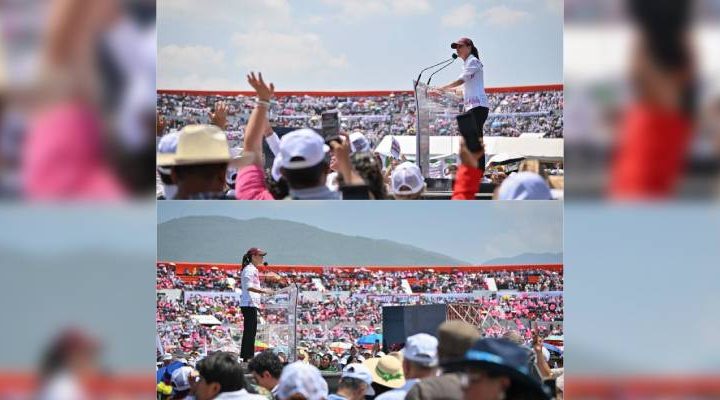
Nosotros somos gobiernos del pueblo: presidenta Claudia Sheinbaum ante cerca de 70 mil chiapanecos
Chiapas recibe con gratitud y los brazos abiertos a la presidenta Claudia Sheinbaum