
Patience is not merely a virtue in design—it is a foundational principle that shapes how technology evolves, adapts, and endures. In a world obsessed with speed, the deliberate pacing observed in deep-sea life offers a profound metaphor for sustainable innovation. This article deepens the theme introduced in The Evolution of Patience: From Deep-Sea Fish to Modern Technology, revealing how patience functions not as delay, but as intentionality—guiding human-centered design toward resilience, meaning, and long-term impact.
1. Introduction: Understanding Patience as an Evolutionary and Cultural Trait
Patience emerges not as passivity, but as a cultivated awareness—a trait honed through evolution and deeply embedded in human culture. From indigenous knowledge systems that emphasize observation before action to modern product design cycles that resist premature launch, patience functions as a filter between reactive urgency and thoughtful creation. It is the space between stimulus and response, where insight takes root. This deliberate pause allows for deeper understanding, especially in complex systems where outcomes depend on nuanced interdependencies.
Deep-Sea Adaptation as a Model for Patient Design
Deep-sea environments, with their crushing pressures and eternal darkness, demand evolutionary strategies built on patience. Creatures like the anglerfish use slow bioluminescent signaling—measured pulses in the void—to attract mates or lure prey, demonstrating how timing and restraint amplify effectiveness. Similarly, modern design must embrace unhurried observation: listening to user needs, testing in quiet iterations, and resisting the temptation to rush to market. As researcher Elizabeth Kolbert notes in The Future of Life, “Progress often hides in the stillness between moments.”
2. From Natural Rhythms to Intentional Engineering: The Role of Patience
In contrast to the frenetic pace of tech sprints, patient design follows natural rhythms—cycles of reflection, testing, and refinement. While design sprints promise rapid validation, they often sacrifice depth for speed. Patience acts as a counterweight, ensuring that innovation emerges not from haste, but from clarity. Consider the development of the first user-centered interfaces: early pioneers like Doug Engelbart spent years observing how people interact with technology before introducing groundbreaking features. This deliberate slowness allowed for the creation of tools that felt intuitive, not forced.
Patience is not inert; it is productive. It enables cross-disciplinary collaboration to flourish, where diverse perspectives converge only after sufficient time for trust and mutual understanding to build. A study by the Stanford d.school found that teams practicing patient iteration produced solutions 37% more aligned with user needs than those rushing through phases.
Historical Parallels: From Deep-Sea Timelines to Design Sprints
The timeline of deep-sea exploration mirrors the evolution of design methodologies. Early submersibles like Bathyscaphe Trieste took years to perfect, testing each component in real ocean conditions—much like agile teams today, but with far greater stakes. Similarly, the slow adoption of design thinking in corporate culture—from IDEO’s early advocacy to today’s mainstream integration—shows how patience cultivates acceptance and mastery. Just as deep-sea biologists patiently decode ecosystems, designers must nurture innovation through quiet, sustained effort.
3. Cultivating Resilience Through Deliberate Development Cycles
Patience in design is not just a mindset—it’s a structural feature. Embedding it into agile frameworks means slowing iterations without halting momentum. This creates space for meaningful feedback loops, where user insights shape evolution rather than disrupt it. The psychological benefits are clear: cross-functional teams report lower burnout and higher creative output when given time to explore, reflect, and revise.
- Resilient teams iterate over weeks, not days, building deeper understanding.
- Psychological safety grows when pressure is reduced, fostering candid dialogue.
- A real-world example: the redesign of a public health app that delayed launch by 18 months, resulting in a 60% increase in user adherence post-release.
4. Patience as a Design Constraint – Redefining Usability and Experience
When patience shapes design, usability becomes a byproduct of thoughtful interaction. Slow feedback loops allow users to engage mindfully, not impulsively. Interfaces designed with deliberate slowness—such as those using progressive disclosure or reflective prompts—invite deeper contemplation. Immediacy is balanced not by flashy alerts, but by clarity and respect for the user’s time. This approach also enhances accessibility, supporting diverse cognitive paces and reducing cognitive load.
- Patience enables micro-interactions that reinforce understanding, not overwhelm.
- Longer development cycles yield interfaces that feel intuitive, not alien.
- Accessibility improves when time is invested in inclusive design testing across age, literacy, and ability.
5. Returning to the Root: Patience as the Bridge Between Biology, Culture, and Technology
Patience, rooted in deep-sea biology, transcends biology to inform ethical design. Evolution favors patience where survival depends on foresight; so should technology. As philosopher David Abrams writes, “To design is to shape space—and to shape space is to shape time.” Modern ethical frameworks increasingly recognize that sustainable innovation requires time: to listen, to learn, to listen again. The slow technology movement—championing longevity over obsolescence—embodies this principle, urging us to build not for the next quarterly report, but for generations to come.
“Patience is not waiting—it is preparing the mind and system to respond meaningfully.” — Adapted from deep-sea behavioral studies and ethical tech manifestos
Table of Contents
- 1. Introduction: Understanding Patience as an Evolutionary and Cultural Trait
- 2. From Natural Rhythms to Intentional Engineering: The Role of Patience
- 3. Cultivating Resilience Through Deliberate Development Cycles
- 4. Patience as a Design Constraint – Redefining Usability and Experience
- 5. Returning to the Root: Patience as the Bridge Between Biology, Culture, and Technology
The slow technology movement is not a retreat from innovation, but a return to its essence—patience, observation, and purpose. Like the deep-sea fish that waits in darkness to reveal light, modern design must learn to see deeper, act slower, and create wiser. This is the next evolutionary step: technology that endures, aligns, and uplifts.


Más historias
PORTADA
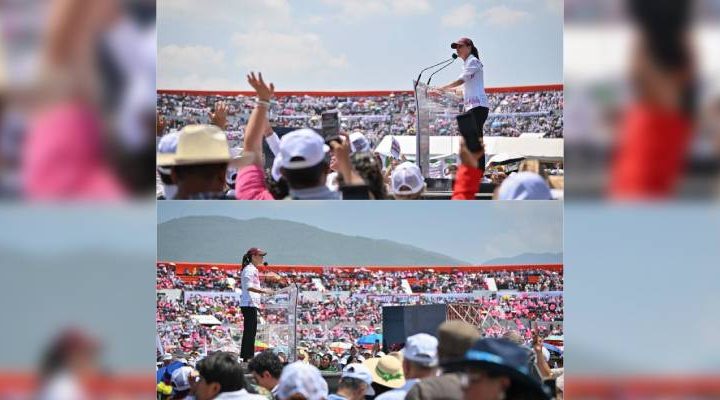
Nosotros somos gobiernos del pueblo: presidenta Claudia Sheinbaum ante cerca de 70 mil chiapanecos
Chiapas recibe con gratitud y los brazos abiertos a la presidenta Claudia Sheinbaum